
Warning: There will be lots of talk of the female body in this post. Please don’t keep reading if that will offend you.

I would like to start this off by asking you not to feel bad if you have asked me how breastfeeding is going. I know people who ask this question are trying to be caring and helpful. Anyone who asks is being nice to me and I recognize that. However, I thought I would write something to let people know how breastfeeding is going and also hopefully raise some awareness along the way.
A lot of people assume I’m breastfeeding for several reasons. My mom was a La Leche League leader and general breastfeeding Evangelist who was famous for helping any woman breastfeed her baby. I grew up going to these meetings and having breastfeeding presented as the best thing a mother can do for her baby. Honestly, I agree. Breastfeeding is awesome and probably the best option for most moms and babies. Since the ’90s, when my mom started going to La Leche League, breastfeeding has definitely become more mainstream. More and more moms are making the choice to breastfeed, which is great! This leads to many assumptions that all moms are breastfeeding, which is not true. The truth is, I am not breastfeeding. Here is why.

My breasts have always been large. I started wearing a bra in third grade and my chest was already massive by the time I was in fourth grade. By fifth grade, I was a DDD cup. Fast forward to college and my breasts had grown to a K cup, and not the type you put in a Keurig. A common response when people hear I wore a size K is, “I didn’t even know that existed!” Neither did I until I needed one! The only place I could buy bras and swimsuits was Amazon, from a brand called Panache. Some of my bras cost up to $80. Needless to say, it wasn’t fun.
Besides issues finding clothing, my physical health was affected by my giant breasts. I had back aches, inability to breathe deeply while lying on my back, and many other annoying symptoms. At 19, I hit my breaking point and started the process of getting a breast reduction. I was able to get it 100% covered by my insurance due to my age and the severity of my symptoms. At 20 years old, in 2015, I had a reduction and have never regretted my decision. Unfortunately, 40% of women who have a reduction cannot breastfeed at all. Those who can, rarely have a full supply and need to supplement with formula or donor milk. I am one of the 60% who had a tiny bit of milk, but not enough.
I tried pumping and ended up only getting about 2 ounces per day. My husband was incredibly supportive and reminded me every day that whatever I could pump was good. I didn’t need to feel bad for not having a full supply. We supplemented with formula until the next storm hit.

Postpartum depression is real, friends. This depression felt like a deep, dark pit of despair that I would never escape. There were days where I did nothing but cry, even though I should have been happy. The provider who prescribes my regular medications offered to prescribe something for the depression. I wanted it, but there was one problem. The main side effect was decreased milk supply. This proved to be the final nail in the coffin for my breastfeeding journey. The medication made my depression go away, but completely dried up my milk.
I had to make peace with this. My son isn’t going to get the benefits of breast milk. But, I can be a better mom because of the decisions I made. I can’t imagine how heavy and large my pre-reduction chest would have been while filled with milk. That would have made my symptoms more dangerous than they were already. I also can’t imagine getting to this point without my medication for postpartum depression. In fact, I think there’s a good chance I wouldn’t be here if it weren’t for that medication. Sometimes we need to prioritize ourselves to better prioritize and serve others. These things that have made me a better mom came at the sacrifice of my ability to breastfeed, but that’s okay because Elias is now getting the best of me. Even though breast milk is the best thing for a baby, formula is far from the worst.
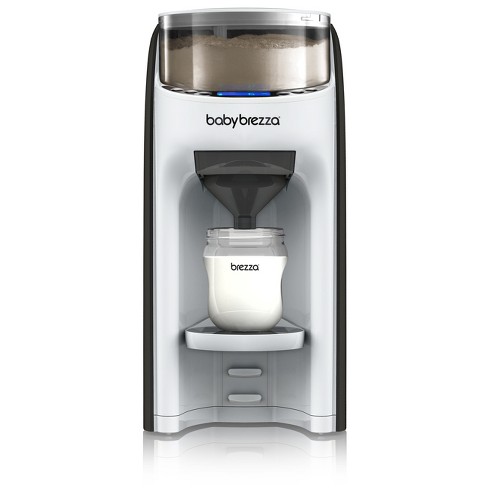
Elias has done great on formula. The hospital stocked Similac and he handled it well, so we stuck with it. We also have this handy machine we affectionately refer to as the “Baby Keurig.” We just push a button and get a perfectly measured and mixed warm bottle. Yes, it’s a little fancy, but this thing is a great sanity saver, especially at 3 AM!
To all the mommas out there struggling with the fact that they can’t or do not want to breastfeed their baby, please give yourself grace. Whatever you have to do to be the best parent you can be is the best decision. There isn’t a manual for any of this and no decision is perfect. Do what is best for yourself and your baby and everything will work out fine.
I’d love to connect with you! Check out my Instagram and Twitter.
 Read it and Steep